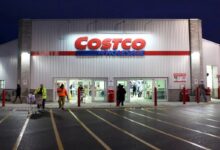
If you’ve ever walked into a Costco warehouse and felt both excitement and mild overwhelm, you’re not alone. Costco isn’t just a store—it’s a retail phenomenon that blends bulk shopping, exclusive deals, and a cult-like following. But what really makes Costco tick?
1. The Origins and Evolution of Costco

Costco’s journey from a single warehouse to a global retail giant is nothing short of remarkable. Founded in 1983 in Seattle, Washington, by James Sinegal and Jeffrey Brotman, Costco pioneered the membership-based warehouse club model in the United States. Unlike traditional supermarkets, Costco focused on offering high-volume, low-margin products to members only, creating a unique shopping experience centered on value and efficiency.
The Founding Vision and Early Challenges
The idea behind Costco was simple: cut out the frills, reduce overhead, and pass the savings directly to customers. Sinegal, a former executive at retail giant Sol Price’s Price Club, brought deep expertise in warehouse retailing. He believed that by limiting product selection to about 4,000 SKUs (compared to 40,000+ in typical supermarkets), Costco could negotiate better prices, reduce inventory costs, and streamline operations.
However, launching a new retail model wasn’t easy. Convincing consumers to pay an annual fee just to shop was a tough sell. Early marketing had to emphasize long-term savings over upfront costs. The strategy worked—by offering deeply discounted electronics, appliances, and groceries, Costco quickly built a loyal customer base.
- First warehouse opened in Kirkland, Washington, in 1983.
- Within five years, Costco expanded to 32 locations across the U.S.
- Merged with Price Club in 1993 to form PriceCostco, later renamed Costco Wholesale Corporation.
Global Expansion and Market Penetration
Costco didn’t stop at U.S. borders. By the late 1990s, it began expanding into Canada, followed by the UK, Mexico, Japan, South Korea, and Australia. Each international venture required adaptation—local tastes, regulations, and shopping habits influenced product offerings and store layouts.
For example, in Japan, Costco introduced smaller packaging to suit smaller households, while in the UK, it adjusted its meat cuts to match local preferences. This localization strategy helped Costco avoid the pitfalls that have doomed other American retailers abroad.
Today, Costco operates over 850 warehouses worldwide, with a significant footprint in Asia-Pacific and Europe. Its international sales now account for nearly 30% of total revenue, a testament to its global appeal.
“Our mission is to continually provide our members with quality goods and services at the lowest possible prices.” — Costco Wholesale Corporation Mission Statement
2. How Costco’s Membership Model Drives Success
At the heart of Costco’s business model is its membership system. Unlike traditional retailers that rely solely on product margins, Costco earns a substantial portion of its profits from membership fees. In fiscal year 2023, membership fees totaled over $4.5 billion—nearly all of Costco’s operating income.
This model creates a self-reinforcing cycle: members pay to shop, which funds lower prices, which attracts more members. It’s a brilliant strategy that aligns the company’s success directly with customer satisfaction.
Types of Membership and Benefits
Costco offers two primary membership tiers: Gold Star and Executive. The Gold Star membership costs $60 per year and grants access to all warehouses and online shopping. The Executive membership, priced at $120 annually, adds a 2% annual reward on qualified purchases (up to $1,000), priority customer service, and additional discounts on services like travel and insurance.
There’s also a Business Membership for small enterprises, which provides the same benefits as Gold Star but is tailored for business expense tracking. Many entrepreneurs use this to buy office supplies, packaging materials, and bulk ingredients.
- Over 125 million members globally as of 2024.
- Renewal rate exceeds 90% in the U.S. and Canada.
- Executive members spend nearly 2.5x more than Gold Star members.
Why the Membership Model Works
The membership fee acts as a psychological barrier that filters out casual shoppers, ensuring that those who enter are serious buyers. This increases the average transaction value and reduces operational waste.
Moreover, the fee creates a sense of exclusivity and value. Members feel they’ve made an investment and are more likely to maximize their return by shopping frequently. Costco further reinforces this by offering services like optical centers, pharmacies, and gas stations—conveniences that keep members coming back.
According to a Statista report, Costco’s renewal rate has consistently stayed above 90% for over a decade, one of the highest in retail.
3. Costco’s Unique Product Strategy and Inventory Control
One of the most distinctive aspects of Costco is its limited product selection. While a typical supermarket stocks tens of thousands of items, Costco carries only about 3,800 to 4,000 SKUs at any given time. This intentional scarcity is a core part of its business philosophy.
By offering fewer choices, Costco can buy in massive quantities, negotiate better deals with suppliers, and maintain faster inventory turnover. This reduces spoilage, especially for perishables, and minimizes the need for markdowns.
Kirkland Signature: The Power of Private Label
Costco’s private label brand, Kirkland Signature, is one of the most successful in retail history. Available across categories—from organic food and wine to tires and prescription drugs—Kirkland products are often comparable in quality to national brands but priced 10–30% lower.
The brand’s success lies in its rigorous testing and direct sourcing. Costco works with top manufacturers (some of whom also produce for premium brands) to create high-quality goods without the marketing overhead. For example, Kirkland’s French Bordeaux wine has won awards in blind tastings, outperforming bottles costing twice as much.
- Kirkland Signature accounts for over 25% of Costco’s total sales.
- Products are tested by Costco’s in-house quality assurance teams.
- Many Kirkland items are manufactured by the same companies that produce for luxury brands.
Rotating Inventory and the ‘Treasure Hunt’ Experience
Costco deliberately rotates its inventory, creating a sense of urgency and discovery. Shoppers never know if a favorite item will be available next week. This ‘treasure hunt’ model encourages frequent visits and impulse buys.
For example, a limited-run $500 TV might appear one month and disappear the next. High-demand items like the famous $1.50 hot dog and soda combo or seasonal rotisserie chickens remain staples, but even these see occasional price adjustments or packaging changes.
This strategy also allows Costco to test new products without long-term commitments. If an item sells well, it may become permanent; if not, it’s quietly removed. This agility keeps the shopping experience dynamic and exciting.
“The treasure hunt is by design. It keeps people coming back to see what’s new.” — Jim Sinegal, Co-Founder of Costco
4. Costco’s Supply Chain and Operational Efficiency
Behind the scenes, Costco runs one of the most efficient supply chains in retail. Its ability to deliver low prices without sacrificing quality stems from a vertically integrated, data-driven logistics network.
Costco owns its distribution centers, controls its trucking fleet, and uses advanced inventory management systems to minimize waste and maximize speed. This end-to-end control allows it to respond quickly to demand fluctuations and reduce reliance on third parties.
Direct Sourcing and Supplier Relationships
Costco bypasses traditional distributors whenever possible, buying directly from manufacturers and farmers. This eliminates middlemen and reduces costs. For instance, Costco sources its salmon from its own farms in Chile and works directly with coffee growers in Latin America.
The company also maintains long-term relationships with suppliers, often signing exclusive contracts. This ensures consistent quality and supply while giving Costco leverage in negotiations. In return, suppliers benefit from guaranteed volume and prompt payments.
- Costco pays suppliers faster than most retailers—often within 28 days.
- Direct sourcing reduces product costs by 5–15%.
- Exclusive deals prevent competitors from carrying certain items.
Warehouse Layout and Inventory Flow
Costco warehouses are designed for efficiency, not comfort. Products are displayed in their shipping containers on pallets, reducing labor costs and restocking time. The layout follows a circular path to guide customers through the entire store, maximizing exposure to high-margin items.
Inventory is managed using real-time data from point-of-sale systems. When stock runs low, automated alerts trigger restocking. This just-in-time model minimizes overstocking and ensures freshness, especially for perishable goods.
A CNN Business report highlighted how Costco’s supply chain resilience helped it avoid the worst of the 2021–2022 global supply chain crisis, maintaining inventory levels when others faced shortages.
5. The Psychology Behind Costco’s Pricing and Marketing
Costco’s pricing strategy is a masterclass in behavioral economics. It uses psychological triggers to make customers feel they’re getting extraordinary value, even when they’re spending hundreds of dollars per visit.
From its famous $1.50 hot dog combo to its $100 smartphones, Costco leverages price anchoring, scarcity, and perceived fairness to drive sales.
The $1.50 Hot Dog Combo: A Loss Leader Legend
No discussion of Costco is complete without mentioning the iconic $1.50 hot dog and soda combo. Introduced in 1984, this item has become a symbol of Costco’s commitment to value. Despite inflation and rising food costs, the price has remained unchanged for decades.
Analysts estimate that Costco loses money on every hot dog sold, but the psychological impact is priceless. It reinforces trust, draws customers into the food court, and encourages them to spend on higher-margin items nearby.
Former CEO Jim Sinegal once said he’d rather “close a warehouse” than raise the price, underscoring its symbolic importance. In 2018, when a potential price hike was rumored, member backlash was so intense that the company reaffirmed its commitment to the $1.50 price.
- Costco sells over 150 million hot dog combos annually.
- The food court generates over $1 billion in annual revenue.
- Hot dog sales drive foot traffic and increase overall basket size.
Odd Pricing and Bulk Psychology
Costco uses odd pricing (e.g., $4.99 instead of $5.00) sparingly. Instead, it emphasizes round numbers and bulk value. A 5-pound bag of organic apples for $3.99 feels like a better deal than $0.79 per pound because the total savings are more visible.
Additionally, buying in bulk triggers a mental calculation: “If I use this over time, the per-unit cost is so low.” This justifies larger purchases, even for non-perishables. Costco amplifies this with unit pricing labels, showing cost per ounce or pound, making comparisons easy.
Research from the Journal of Consumer Research shows that bulk pricing increases perceived value, especially when combined with a trusted brand like Kirkland Signature.
6. Costco’s Employee Culture and Labor Practices
One of the most surprising aspects of Costco’s success is its treatment of employees. While many retailers cut labor costs to boost profits, Costco invests heavily in its workforce—paying higher wages, offering robust benefits, and promoting from within.
This strategy not only reduces turnover but also enhances customer service and operational efficiency.
Wages, Benefits, and Employee Satisfaction
The average hourly wage at Costco is over $25, significantly higher than competitors like Walmart or Target. Full-time employees receive health insurance, 401(k) matching, paid time off, and stock purchase plans—even for part-timers after one year.
According to a Glassdoor review, Costco consistently ranks among the top retailers for employee satisfaction, with a 4.2/5 rating and over 80% approval from reviewers.
- Employee turnover is under 10%, compared to 60% industry average.
- Over 90% of store managers started as hourly workers.
- Healthcare coverage costs Costco over $300 million annually.
The Business Case for Treating Employees Well
While Costco’s labor costs are higher, the return on investment is clear. Well-paid, trained employees are more productive, provide better customer service, and reduce shrinkage (theft and loss).
A study by the Economic Policy Institute found that Costco’s sales per employee are nearly double those of its competitors, proving that higher wages can drive efficiency and profitability.
Former CEO Craig Jelinek famously said, “If you treat employees right, they’ll treat the customers right, and the customers will come back.” This philosophy is embedded in Costco’s culture.
“We take care of our people, and they take care of our members and our business.” — Craig Jelinek, Former CEO of Costco
7. The Future of Costco: Innovation and Challenges Ahead
As consumer habits evolve, Costco faces both opportunities and threats. E-commerce growth, changing demographics, and global competition are reshaping the retail landscape. How Costco adapts will determine its long-term success.
While it has been slower than rivals to embrace digital transformation, Costco is making significant strides in online shopping, same-day delivery, and tech integration.
E-Commerce and Digital Transformation
Costco launched its e-commerce platform in the late 1990s but kept it limited for years, fearing it would cannibalize warehouse sales. However, the pandemic accelerated its digital strategy. Online sales surged by over 100% in 2020 and have continued to grow.
Today, Costco offers same-day delivery in select markets through Instacart and its own fleet, curbside pickup, and a robust mobile app. It also sells high-margin items like electronics and jewelry online, where customers are more comfortable making large purchases without seeing the product in person.
- Online sales accounted for over 15% of total revenue in 2023.
- Costco.com now offers over 10,000 items, up from 2,000 in 2019.
- Mobile app usage has increased by 60% since 2020.
Sustainability and Ethical Sourcing Challenges
As consumers demand more transparency, Costco faces pressure to improve its sustainability practices. While it has made progress—such as eliminating single-use plastics and sourcing sustainable seafood—critics argue it could do more.
Animal welfare, carbon emissions from its trucking fleet, and packaging waste are ongoing concerns. In response, Costco has committed to net-zero emissions by 2050 and is investing in electric delivery vehicles and renewable energy for warehouses.
It also partners with organizations like the Marine Stewardship Council to ensure responsible fishing practices. However, balancing low prices with ethical sourcing remains a complex challenge.
What makes Costco different from other supermarkets?
Costco operates on a membership-only model, offers a limited selection of high-turnover items, and focuses on bulk pricing. Unlike traditional supermarkets, it generates most of its profit from membership fees, not product markups, allowing it to offer lower prices.
Is a Costco membership worth it?
For frequent shoppers, especially those buying groceries, electronics, or household essentials in bulk, a Costco membership often pays for itself many times over. The Executive membership is particularly valuable if you spend over $2,500 annually, as the 2% reward can exceed the extra $60 cost.
Why is Costco’s hot dog combo only $1.50?
The $1.50 hot dog and soda combo is a legendary loss leader. While Costco loses money on each sale, the item drives massive foot traffic, enhances customer loyalty, and encourages additional spending in the warehouse.
Does Costco pay good wages?
Yes. Costco pays an average hourly wage of over $25, provides health benefits to part-time workers, and offers strong career advancement opportunities. Its employee satisfaction and retention rates are among the best in retail.
Can you shop at Costco without a membership?
Generally, no. However, Costco offers a temporary guest pass for non-members to shop once, and some services like the pharmacy or optical center may allow limited access with a member present.
Costco’s success isn’t accidental—it’s the result of a meticulously crafted business model that prioritizes value, efficiency, and employee well-being. From its membership-driven revenue to its private-label dominance and supply chain mastery, every element is designed to deliver exceptional value. While challenges like digital transformation and sustainability loom, Costco’s core principles remain strong. Whether you’re a bargain hunter, a business owner, or just curious about retail magic, understanding Costco offers insights into what truly drives customer loyalty and long-term profitability.
Further Reading:
